
Open-cell foam insulation
A lower-cost spray foam option well-suited for interior applications and soundproofing - a natural complement to closed-cell foam for whole-home projects.
Learn more →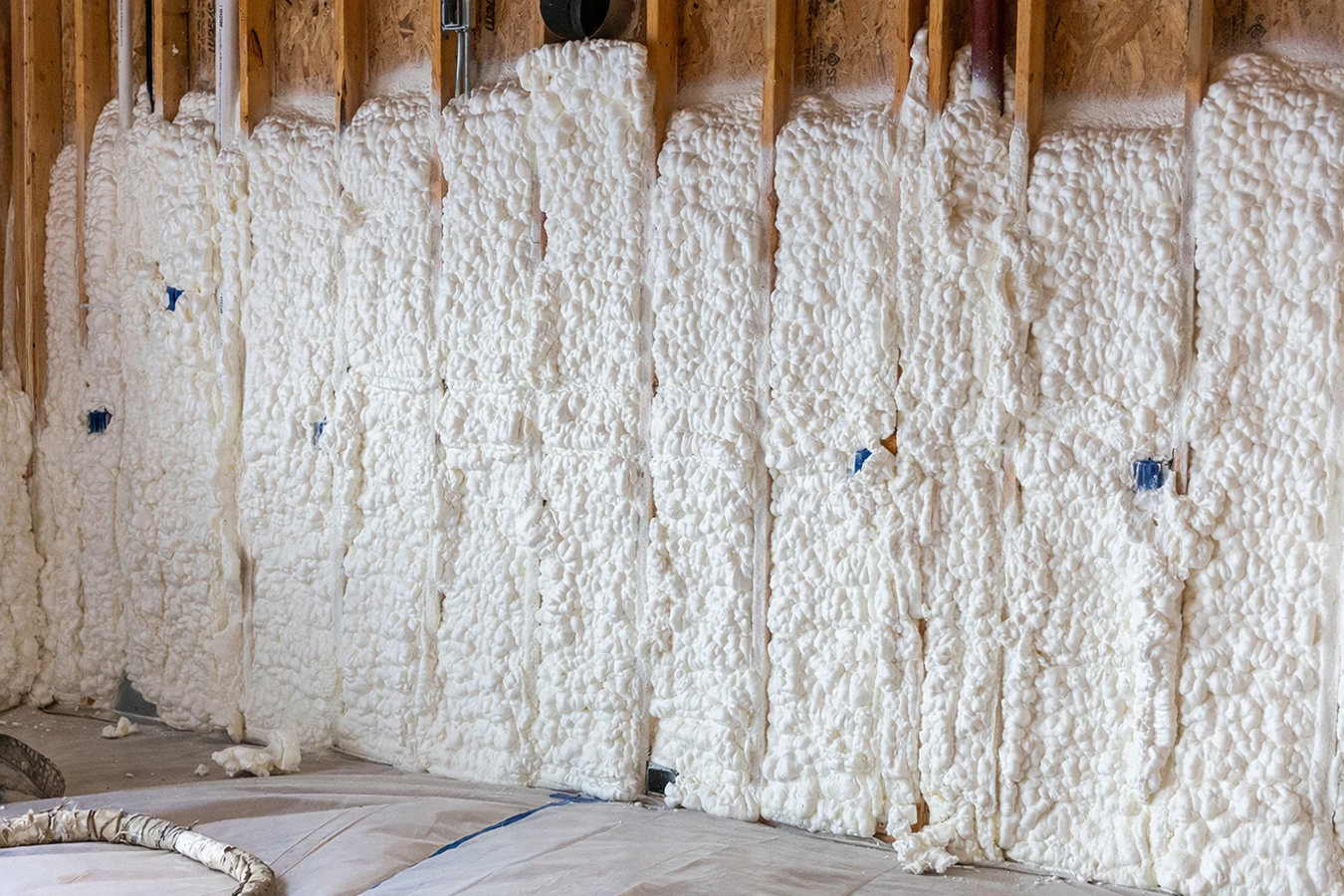
Closed-cell spray foam insulates and seals air gaps at the same time, delivering the highest R-value per inch available - and the moisture resistance your Sioux City home needs in every season.
Closed-cell foam insulation in Sioux City expands to fill every gap and hardens into a dense, rigid layer that insulates and blocks air movement at the same time - most jobs cover an attic, crawl space, or basement in one to two days. Most insulation products only slow heat transfer. Closed-cell foam does that and seals the air gaps that let conditioned air escape and outside air in, which is why it performs so much better than products that address only one of those two problems. According to the U.S. Department of Energy, closed-cell foam delivers roughly R-6 to R-7 per inch - about twice the resistance per inch compared to fiberglass batts.
For Sioux City homes, this combination matters a great deal. The city's climate swings from well below zero in winter to over 90 degrees in summer, and that range puts constant pressure on your home's thermal envelope. Older homes in neighborhoods like Morningside, Leeds, and the Historic Northside often have rim joists, wall cavities, and attic spaces that were never properly insulated - and closed-cell foam is especially well-suited for retrofitting those tight, irregular spaces where traditional batts simply cannot be installed effectively. It pairs naturally with our open-cell foam insulation service for interior applications, and with spray foam insulation for whole-home projects that need the highest performance available.
If your gas or energy bills climb sharply each November and stay high through March despite no changes to your thermostat habits, your home is likely losing heat through gaps, thin insulation, or both. Sioux City winters are long and the heating season is real - a home that is not well-sealed works your furnace much harder than it should, and that shows up on the bill every month from fall through spring.
Cold air sneaking in around electrical outlets on exterior walls, along baseboards, or near windows is a sign that your walls have air gaps that insulation alone has not sealed. This is especially common in Sioux City's older neighborhoods, where homes have settled over decades and small gaps have opened in the framing. Closed-cell foam fills those gaps completely - the drafts stop, not just slow down.
Sioux City's proximity to the Missouri and Big Sioux rivers means ground moisture is a real concern, especially after rainy springs or heavy snowmelt. If you notice a damp or musty smell from your crawl space or basement, moisture is likely getting in through the foundation walls or floor. That moisture can lead to mold and wood rot over time, and closed-cell foam applied to those surfaces is one of the most effective ways to stop it.
If your upstairs bedrooms are noticeably hotter in summer and colder in winter than the rest of the house, your attic insulation is likely inadequate. The same goes for rooms above an unheated garage. Without proper insulation on the surface between the attic or garage and the living space above, those rooms will always feel uncomfortable - and closed-cell foam applied to the roof deck or floor cavity makes a dramatic, noticeable difference.
We spray closed-cell foam in controlled passes, building up the right thickness for your climate zone and the specific area being treated. The foam expands and hardens within seconds, bonding directly to framing, concrete, and sheathing. That bond is part of what makes it so effective - there are no gaps between the material and the surface, which means no paths for air or moisture to work through over time. For Sioux City homes, we most commonly apply closed-cell foam to crawl space walls and rim joists, attic roof decks in unvented assemblies, and basement foundation walls. Each application is measured before and after so you have a real record of what was installed, not just a verbal description.
For homeowners who want the full picture before deciding, our open-cell foam insulation service handles interior applications where a lower-cost, softer foam performs just as well. Our spray foam insulation page covers the broader category and helps you understand when closed-cell is the right call versus when another approach makes more sense. We will always recommend the most cost-effective solution for your specific home - not the most expensive one.
Ideal for homes near lower-lying areas of Sioux City - seals moisture vapor, stops cold air, and insulates in one pass without requiring vapor barriers in most cases.
Targets the single most common air infiltration point in older Sioux City homes - the gap where floor framing meets the top of your foundation wall.
Creates an unvented attic assembly that keeps ductwork and mechanical equipment in conditioned space - a major performance upgrade for homes with HVAC equipment in the attic.
The highest-performance option for foundation walls where both moisture resistance and maximum insulation value are needed - no separate vapor barrier required.
Sioux City sits in a climate zone where winter temperatures regularly drop below zero and summer heat pushes into the 90s. That wide swing puts enormous stress on your home's thermal envelope, and closed-cell foam handles that range better than most alternatives because it does not compress, settle, or lose effectiveness when temperatures shift dramatically. Beyond the cold, Sioux City's location at the confluence of the Missouri and Big Sioux rivers means ground moisture is a persistent concern - especially in lower-lying parts of the city and after wet springs. Closed-cell foam's low vapor permeability makes it one of the most effective tools for keeping that ground-level dampness from working its way into your crawl space or basement walls. Homeowners in North Sioux City face the same climate conditions and benefit from the same high-performance approach.
A large share of Sioux City's residential housing stock was built before modern insulation standards existed - particularly in neighborhoods like Morningside and the Historic Northside. Homes built before the 1980s often have rim joists and wall cavities that were never properly filled, and closed-cell foam is especially well-suited for retrofitting those tight, irregular spaces. Iowa also periodically offers utility rebate programs through providers like MidAmerican Energy that can offset part of the project cost, and the federal energy efficiency tax credit may apply to qualifying work. The Spray Polyurethane Foam Alliance provides guidance on proper installation standards that any qualified contractor should follow. Homeowners across the border in South Sioux City deal with the same moisture and cold-weather pressures, and we serve that area as well.
We ask a few basic questions about the area you want insulated, whether the space is accessible, and whether you have noticed any specific problems like drafts or moisture. We reply within one business day and schedule your free in-home estimate from there.
We measure the area, check for existing insulation, look for moisture issues that should be addressed first, and assess how accessible the space is for our equipment. After the visit, you get a written estimate that breaks down exactly what will be done and what it will cost - no phone quotes, no surprises.
Before installation day, we will tell you what to move or cover and confirm your re-entry time in writing - typically 24 hours after spraying. Plan ahead for yourself, your family, and any pets to be out of the house for that window. This is temporary and the only real disruption most homeowners experience.
The crew arrives with heated chemical tanks and a hose system and sprays the foam in controlled passes. Most jobs take one to two days. Before we leave, we inspect for any thin spots, touch up where needed, and walk you through the completed work so you can see exactly what was installed.
Written quote, no obligation, no sales pitch. We reply within one business day.
(712) 569-1118Closed-cell foam's performance depends heavily on being applied at the correct thickness for your climate zone. We measure during installation and document the final result - so you have a written record confirming the work meets performance targets, not just a verbal guarantee.
Applying closed-cell foam over an active moisture problem traps the moisture and creates far worse damage than the original issue. We inspect every project area for signs of water intrusion before the first pass of foam is sprayed - because skipping that step is how jobs go wrong.
A large portion of our work is in homes built before the 1980s in neighborhoods like Morningside and the North Side. These homes require an installer who understands older framing methods, irregular cavities, and the specific challenges of retrofitting modern insulation materials into structures that were never designed to receive them.
We tell you your re-entry time in writing before any work begins - not as an afterthought. The EPA recommends homeowners and pets stay out for at least 24 hours after spray foam application, and we follow that guidance on every job. You will never be surprised by this step.
We serve all 12 areas in our region, and we have applied closed-cell foam to homes across Sioux City from older bungalows in the Historic Northside to ranch homes on the south side. Every job gets a final walkthrough before the crew leaves, because you deserve to see the finished work with your own eyes.
A lower-cost spray foam option well-suited for interior applications and soundproofing - a natural complement to closed-cell foam for whole-home projects.
Learn more →The broader spray foam category covering both open- and closed-cell options - the right starting point if you are still deciding which product fits your home and budget.
Learn more →Winter scheduling fills up fast - lock in your install date now and have your home ready before the coldest months hit.