
Attic Insulation
Blown-in and batt attic insulation for Sioux City homes - the most effective way to meet Iowa's recommended R-49 levels and stop heat from escaping through your roof.
Learn more →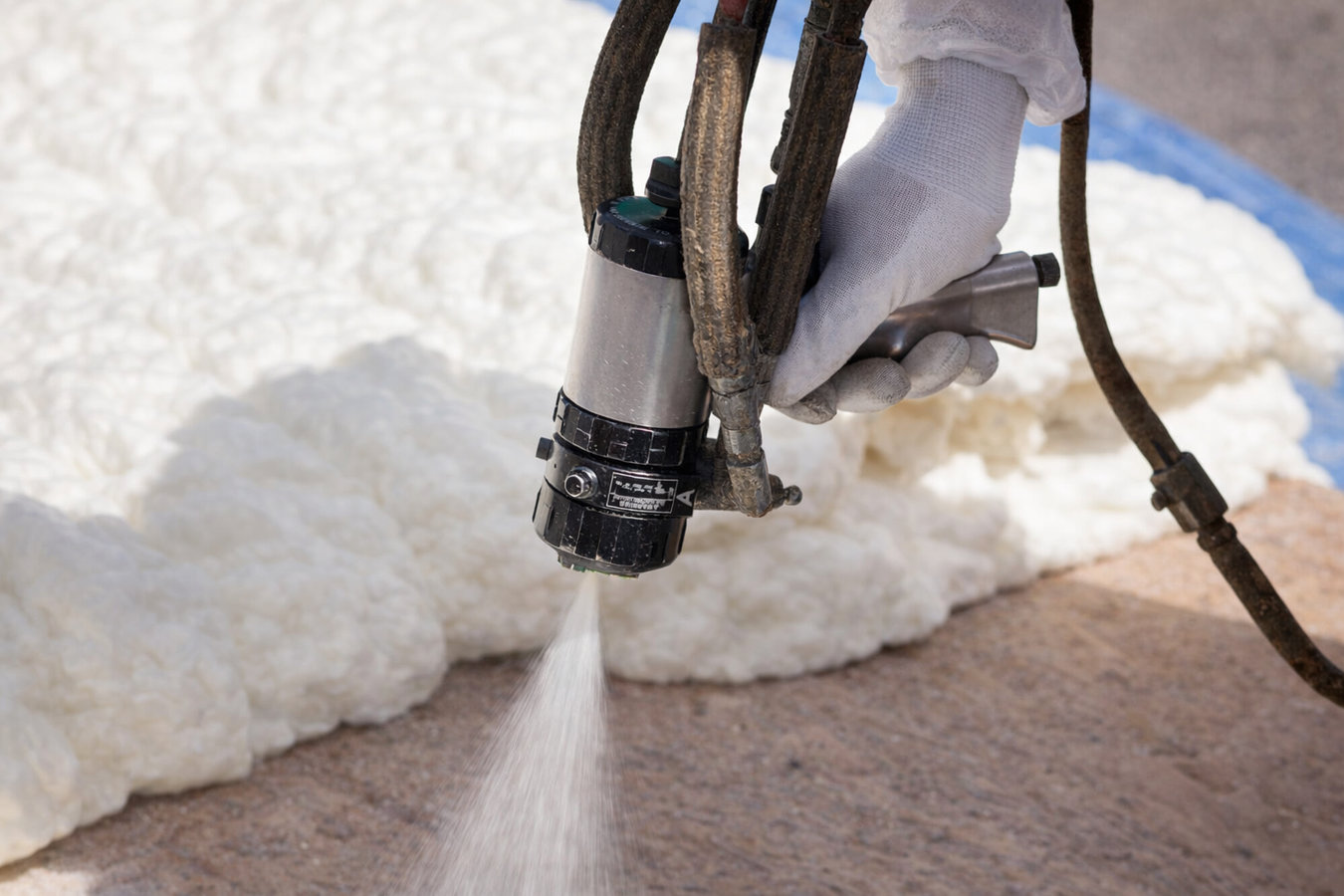
Iowa winters are brutal. If your home is cold in January or your heating bill never seems to come down, spray foam insulation seals the gaps that other insulation types miss - and it does it in one application.
Spray foam insulation in Sioux City fills and seals air gaps while insulating at the same time - most residential jobs in attics or crawl spaces take one to two days. Unlike fiberglass batts that only slow heat transfer, spray foam expands on contact and hardens into a solid barrier that stops drafts and moisture at the source. That dual action is why it performs so well in Iowa's climate, where temperatures swing more than 100 degrees between January and July.
If your home was built before 1980 - like many in Morningside, Leeds, or the North Side - the rim joists and crawl spaces probably have little to no insulation. Spray foam works well in these tight, irregular spaces because it expands to fill gaps that batts or blown-in material can't reach. For attics specifically, we also offer attic insulation services using blown-in and batt materials when foam isn't the right fit.
If your gas or electric bill climbs sharply when temperatures drop below zero and never seems to recover, your home is likely losing heat through gaps in the attic or rim joists. Once your furnace has been serviced and is running fine, the problem is almost always insulation and air sealing.
Hold your hand near an electrical outlet on an exterior wall on a cold day. If you feel cold air, it's moving through gaps in your wall cavity. Baseboards and the corners where walls meet floors are other common entry points in older Sioux City homes where decades of settling have opened up cracks.
Sioux City's location near the Missouri River means crawl spaces here are especially prone to dampness. A musty smell coming up through your floors, or visible moisture on foundation walls, means water is getting in. Closed-cell spray foam stops that moisture before it causes rot or mold.
If your upstairs bedrooms are stuffy in summer and freezing in winter no matter how hard your HVAC works, the attic above them is probably under-insulated or has significant air leaks. This is one of the most common complaints in Sioux City's older two-story homes.
We install both open-cell and closed-cell spray foam depending on where in your home the work is being done and what problem you're trying to solve. Open-cell foam is the right choice for interior walls and attic cavities where sound dampening is a bonus and moisture isn't a primary concern. Closed-cell foam - which is denser and also acts as a moisture barrier - is what we use in crawl spaces, basement rim joists, and anywhere water or humidity is a factor.
For homeowners deciding between options, our closed-cell foam insulation service covers applications where moisture resistance is critical, while our attic insulation service covers blown-in and batt alternatives for attic floors. We assess your home and recommend the right approach - not just the most expensive one.
Best for interior walls and attic cavities where sound dampening matters and moisture is not a primary concern.
The right choice for crawl spaces, basement rim joists, and any area where moisture resistance is as important as insulation.
Ideal for older homes where the rim joist between your foundation and first floor is uninsulated - one of the biggest sources of heat loss.
Applies foam to crawl space walls and floor joists, creating a thermal and moisture barrier that protects the structure below your home.
Sioux City sits in a climate zone where winters regularly drop well below zero and summers push into the 90s. That 100-plus degree swing puts enormous pressure on your home's insulation to perform year-round. Spray foam's ability to both insulate and seal air gaps makes it especially well-suited here, where a drafty home means sky-high utility bills in both January and July. Homes in South Sioux City, NE across the river face the same conditions and see the same results after a properly done spray foam job.
Sioux City's location at the confluence of the Missouri, Big Sioux, and Floyd rivers means parts of the city - particularly lower-lying neighborhoods - experience elevated ground moisture and humidity. Crawl spaces in these areas are especially prone to moisture intrusion, which can rot wood framing and create conditions for mold. This is why we recommend closed-cell foam for any crawl space job in Sioux City. Homeowners in Dakota Dunes, SD - another area near the river - face similar moisture challenges that closed-cell foam handles well. According to the U.S. Environmental Protection Agency, properly installed spray foam is safe and stable once fully cured, with no ongoing maintenance required.
We respond within 1 business day. On your first call, we ask a few basic questions - what area of the home you're concerned about, how old the house is, and what problem you're trying to solve. No pressure, no commitment.
A contractor visits your home and walks through the areas you want insulated - attic, crawl space, basement rim joists, or walls. This visit takes 30 to 60 minutes. You'll get a written estimate that covers the area, the type of foam, and the total cost.
If your project requires a City of Sioux City building permit - which is typical for work that changes your home's thermal envelope - we pull it before work begins. You get a timeline with that factored in.
The crew arrives, installs the foam, and walks you through the finished work before anything gets covered. You inspect the coverage, ask questions, and we answer them. Plan to be out of the treated area for a few hours after spraying.
We respond within 1 business day. There's no obligation to the estimate - it's just a conversation about your home. After you submit, someone from our office will call to schedule a free on-site assessment at a time that works for you.
(712) 569-1118When a City of Sioux City building permit is required, we pull it - you don't have to navigate that yourself. Every job comes with a documented record of exactly what was installed.
We work across 12 cities and communities in Iowa, Nebraska, and South Dakota. When you call, you're talking to someone who knows Morningside, the North Side, and the neighborhoods near the river - not a national call center.
Every estimate starts with a site visit - no quoting over the phone based on square footage alone. Older homes in particular have variables that only show up in person: limited access, old wiring, moisture, and decades of settling.
We walk you through the finished foam before drywall or covering goes back up. You can see the coverage and check for gaps. The U.S. Department of Energy recommends this as a best practice - it's the only way to verify the job was done right.
These aren't talking points. They're the specific things homeowners in Sioux City ask about before signing a contract - and they're the reasons most of our new customers come from referrals. Reach out to get started.
Blown-in and batt attic insulation for Sioux City homes - the most effective way to meet Iowa's recommended R-49 levels and stop heat from escaping through your roof.
Learn more →High-density closed-cell foam for crawl spaces, basement walls, and rim joists - delivers both moisture resistance and maximum insulating value per inch.
Learn more →Sioux City winters don't wait - get your home sealed before the next heating season hits.